*First, I want to apologize for my late blog post. This past week was Chuseok (a traditional Korean holiday celebrating the year’s harvest), and I didn’t have access to a computer while I was visiting my family. It was my first ever Chuseok, and it was a great, memorable experience. Be sure to read my next blog post for more details!
*Second, I’m still in the process of figuring out this whole “blogging” thing. I feel that my past posts have been very formal. In order to give you all a more authentic and personal experience, I am experimenting with a new method of writing—a more informal one. Please bear with me as I try to discover my own blogging style 🙂
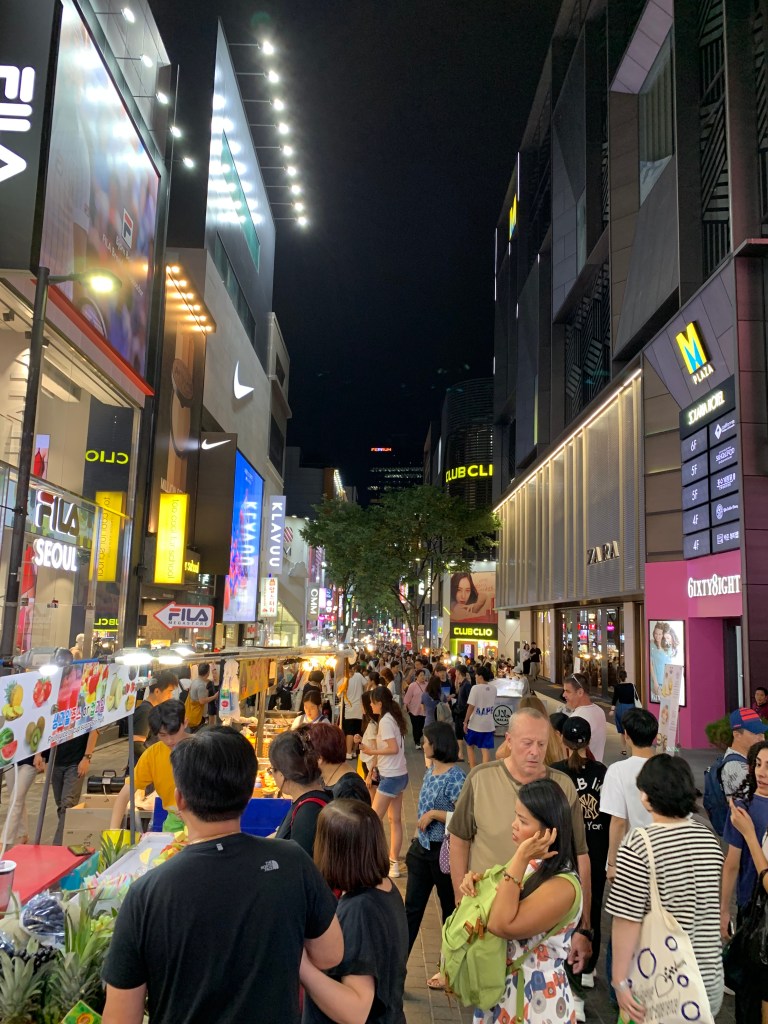
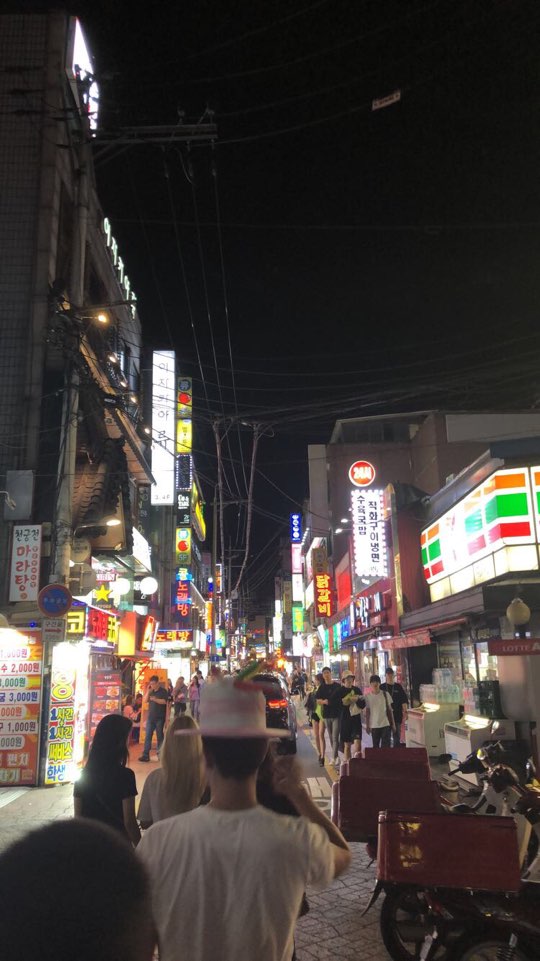
Growing up, I always heard the phrase “New York City: the city that never sleeps.” I didn’t quite understand what it meant until I went to visit the world-renowned site two summers ago. It definitely left an impression on me. People stayed out really late, doing all sorts of nightlife activities that my nineteen-year-old self could not. The bustle intrigued me, especially because I grew up in suburban Georgia where there isn’t much to do past 9 PM. By the end of the trip, I wanted to live in New York City. No city could compare, right?
A few weeks into my study abroad program, I’ve realized that Seoul is similar to New York City in that regard. In fact, I argue that it’s even more busy than the famous, American city. Koreans are outside every night. I see people eating dinner at 9 PM and staying out until the break of dawn. Friday’s and Saturday’s are especially busy. For example, every street I walk through in Sinchon (the region where Yonsei University is located) is filled with people. The lights on the stores shine bright as diamonds, reminding me of Times Square (minus all the flashy screens). At this point, the LED lights outlining the word “노래방” (karaoke) have ingrained themselves in my memory. Also, food is available essentially everywhere at any time, drawing even more people outdoors. I’ve lost track of all the 24-hour restaurants in the area. The nightlife is truly fun and exciting. The bustle of this city will definitely bring me back in the future.
People from all over the world come to visit Seoul as well. I hear different languages all around me as I walk around the city. The most common foreign languages are English, Chinese, and Japanese. I do, however, occasionally hear German and Russian. I don’t know when South Korea became such a hotspot for tourists around the world. I remember a point in time when my parents and I got excited after every mention of Korea on western television shows and songs. Now, it doesn’t seem as uncommon (BTS on the American radio really caught me off guard). I’m really glad people are beginning to acknowledge and appreciate Korean culture. Even as a Korean-American, I hold these nationalistic feelings.
If you haven’t visited Seoul yet, I highly encourage you to do so. It’s quite easy to navigate through the city and find fun spots. Even if you do get lost, just ask for help! Most Koreans speak English—or at least comprehend it to some degree. They are almost always willing to help 🙂
 Jacob's Study Abroad Blog